

Why Schools are Adopting AI for Exam Evaluation & Result Analysis
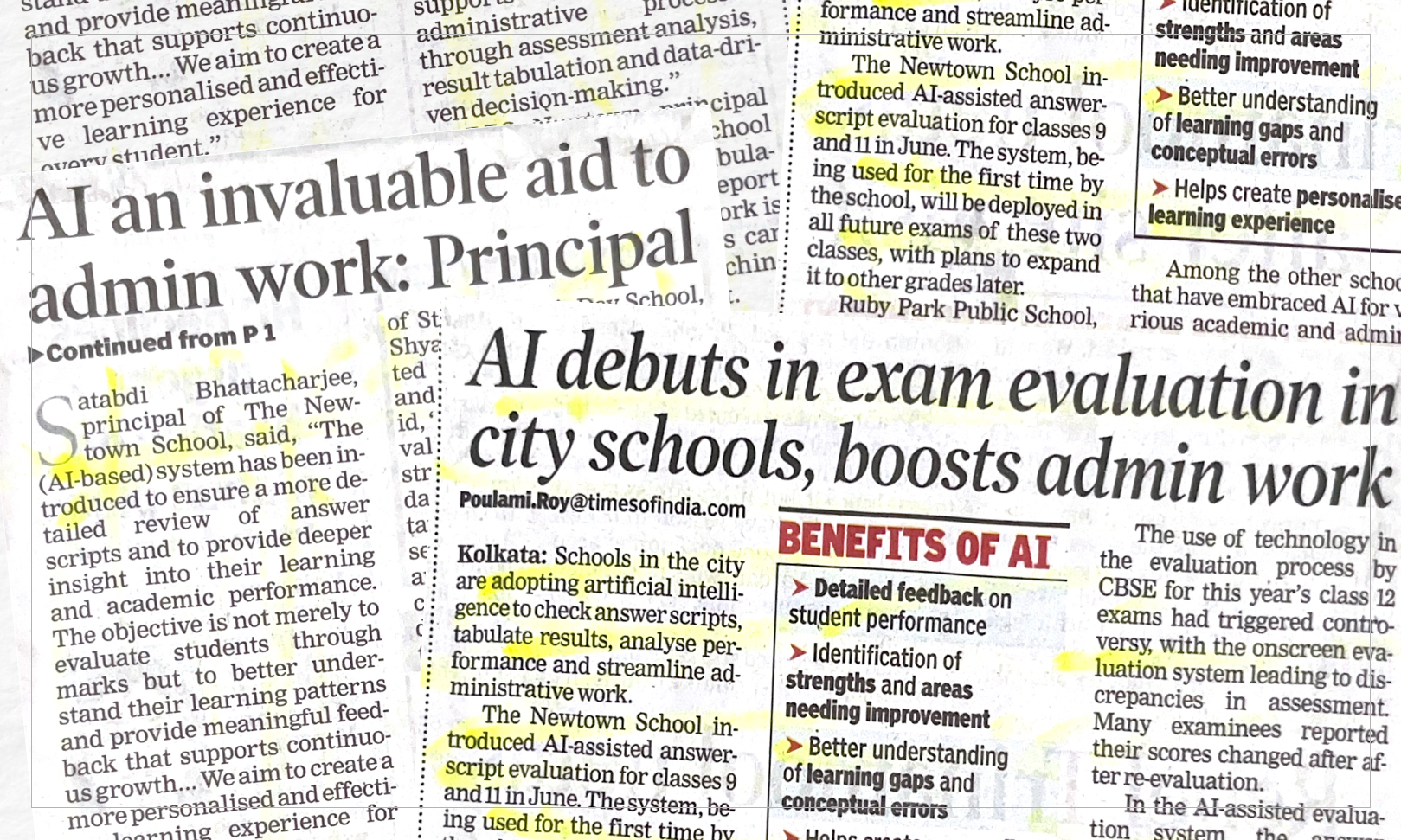
For generations, the standard mid-term or annual examination cycle has sparked a collective sigh of exhaustion across K-12 campus staff rooms. The legacy routine is notorious : educators buried under monumental stacks of physical answer scripts, manually tallying marks, and navigating tedious spreadsheet calculations. In an era where educational precision is vital, this manual drag consumes hundreds of cumulative hours that should be spent on student development.
Today, forward-thinking institutions are shifting away from traditional paperwork bottlenecks. By integrating advanced artificial intelligence directly into centralized school management software, administrators are rewriting the blueprint of academic operations. Moving evaluation and result tabulation to an educational ERP software infrastructure isn’t just about speed—it’s about absolute data integrity, deeper scholastic insights, and liberating educators from operational fatigue.
The Hidden Bottlenecks of Traditional Examination Formats
In legacy school workflows, the examination cycle introduces massive administrative overhead and critical exposure risks:
- Evaluation Overload: Teachers spend late nights grading hundreds of repetitive answer sheets, creating severe burnout and lowering classroom engagement.
- Tabulation Lags: Manually migrating marks from physical scripts into fragmented spreadsheets leads to keying errors and prolonged delays in report card distribution.
- Lack of Actionable Insights: Traditional report cards offer flat percentages but completely fail to identify precise learning gaps or institutional performance trends.
How AI-Driven Evaluation Reshapes School Administration
Modern school management system platforms are solving these issues by embedding intelligent automation engines into the core grading lifecycle. Here is how schools are maximizing focus and optimizing efficiency:
1. Instant Automated Result Tabulation
The moment an exam concludes, integrated AI scanners and OCR engines can evaluate objective sections and digitize subjective markings seamlessly. Instead of cross-checking rows manually, marks flow instantly into the central cloud database, triggering real-time ledger updates.
2. Advanced Diagnostic Result Analysis
Beyond basic marks, AI engines parse institutional metrics to deliver instant predictive analytics. Administrators and principals get a birds-eye overview of section-wise performance, subject weaknesses, and student cohorts requiring remedial attention.
3. Eradicating Administrative Drag & Bias
Automated verification structures ensure grading rules are applied uniformly across all classes. This removes subjective bias, completely eliminates clerical calculation errors, and drastically reduces internal administrative overhead.
Cultivating Academic Excellence with Educational ERP software like TulipDesk
Transitioning to an all-in-one cloud platform is the definitive framework for successful school management in 2026. By automating exam tracking and grading mechanics, leadership teams can reclaim their time and cultivate digital trust within their parent-teacher ecosystem.
Built by HK Infoware Ltd on enterprise-grade infrastructure with robust role-based access control, end-to-end encryption, and full DPDP Act readiness, TulipDesk gives your school absolute control over its academic and data operations. Keep your school operations streamlined, analytical, and protected, always.
Conclusion
As modern education transitions into a fully data-driven ecosystem, adopting AI for exam evaluation and result analysis is the ultimate foundation for institutional efficiency. Embracing smart automation via advanced school management software allows modern schools to eliminate human errors, save massive labor hours, and unlock precision analytics that help every student succeed.