

Why Digital School Management is the Future of Education
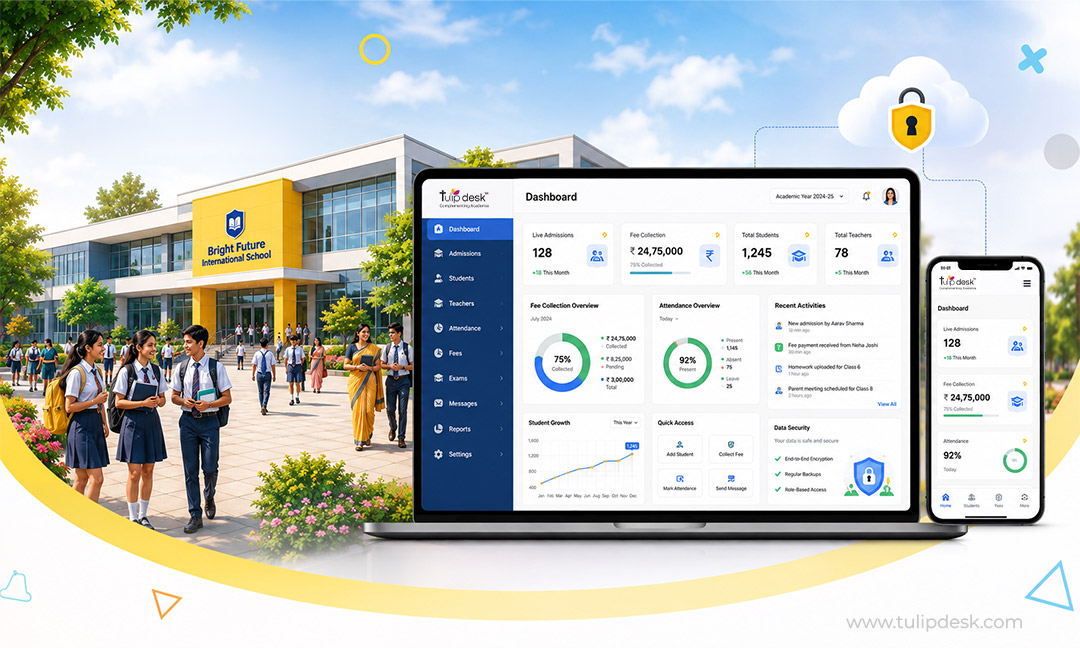
In India, having an effective school administration system is becoming more of a standard expectation than an improvement. What once was manageable with a few registers and a filing cabinet now involves academic calendars, tuition ledgers, transport logs, and student data that needs real protection. Many schools are still attempting to run all of that on paper, spreadsheets, and institutional memory.
Not only can cloud-based school software simplify administrative tasks, but it also transforms the way employees spend their time by providing them with real-time supervision. Rather than reviewing a pile of documents manually, they can focus on academic excellence.
Eradicating Paperwork Bottlenecks with Smart ERPs
Teachers and coordinators must spend hours each week on manual, repetitive work due to traditional administrative processes. By automating tasks that should not need to be performed twice by a human, an effective educational ERP relieves that burden.
- Integrated Online Admission Management: Parents will not have to wait in line for hours to turn in paperwork because admissions may be done entirely online, from the first form to document checks to fee payment.
- Automated Fees & Finance Management: The front desk and the accounts office are now working from the same numbers rather than having to reconcile gaps later because fees and financing are locked into a defined framework with automatic ledger entries.
- Real-Time Transport Management System: GPS and route mapping allow for real-time transportation tracking, which is important for both safety and the numerous “where is the bus” calls that schools receive every afternoon.
Uncompromising Data Protection and Compliance
Schools have a lot of sensitive data, including student records, grades, and financial information. According to India’s Digital Personal Data Protection (DPDP) Act, handling this data carelessly is not just bad practice but a serious hazard. The type of setup that the law is intended to phase out is open spreadsheets and shared logins that allow everyone to see everything. The remedy is quite easy in principle: give people access to only what their function actually needs. Instructors view the data in their own section. Payroll modifications and bulk exports are examples of sensitive actions that are restricted to a small group. It’s not complicated, but it does require the system to be built for it from the start.
Conclusion
Changing to digital management is not about following a trend. A school management system in India is about choosing the most effective path toward building a resilient, transparent, and scalable campus. Less time spent on paperwork, fewer financial errors, and data that is truly safeguarded as intended. TulipDesk, built by HK Infoware Ltd, is designed around exactly this. It runs on secure cloud infrastructure and is built for DPDP compliance from the ground up. Schools using it have reduced administrative overhead by around 90%.