

How Online Library Management Software Simplifies School Operations
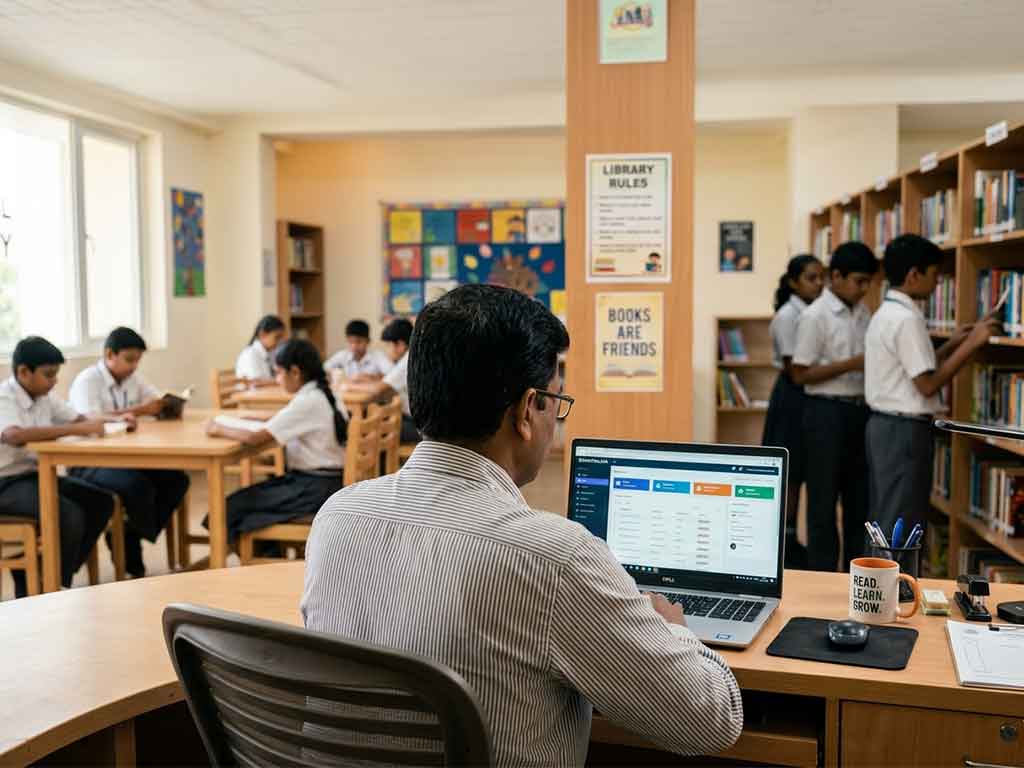
In the age of e-learning, books still remain the heart of every classroom. Technology can guide students, but books nurture their minds in ways screens cannot. School libraries play a vital role in enhancing students’ understanding beyond textbooks and classroom lessons. They provide access to diverse knowledge, encourage curiosity, and allow students to explore different cultures, ideas, and perspectives.
However, traditional library systems often face several challenges. Managing book records manually can be time-consuming and prone to errors. Finding books becomes difficult when catalogs are outdated or poorly maintained. Students may struggle to know whether a book is available, and librarians often spend valuable time tracking issued books, calculating fines, and maintaining registers. Additionally, manual systems make it harder to generate reports, monitor reading trends, or manage large collections efficiently. These limitations can slow down library operations and reduce the overall learning experience for students.
Modern schools are increasingly adopting technology to streamline their daily operations. One of the areas where technology has made a remarkable impact is library management. Online Library Management Software has revolutionized this space, simplifying operations for both administrators and students, thereby addressing the common challenges.
What is Online Library Management Software?
A cloud-based online Library Management Software is a digital platform designed to automate and centralize all library-related tasks. It handles various library functions, including book cataloging, circulation, member management, and resource tracking, and reporting. Such a system enables librarians and library staffs to efficiently organize, maintain, and monitor the vast collection of books, journals, multimedia, and other resources. These tools typically support both physical books and digital resources (e-books, journals, and multimedia) offering features like barcode/RFID scanning, online public access catalogs (OPAC), and automated notifications. Many modern systems also integrate with school ERP (Enterprise Resource Planning) software, making them a seamless part of the overall school ecosystem.
What are the Key Features of Online Library Management Software?
1. Library management system with barcode scanner
One of the key features of a modern library management system is barcode-enabled cataloging. This functionality has several advantages:-
- Each book is assigned a unique barcode, making it easy to track, issue, and return items with accuracy and speed.
- It allows librarians to create and maintain a detailed digital database of all library materials, including essential information such as book titles, authors, ISBN numbers, and publication details.
- Administrators can easily add new books, update existing entries, and categorize them by subject, author, or genre.
- Students and teachers can quickly search for books online, check availability, and reserve them without waiting in long queues.
- This system eliminates the need for bulky ledgers and makes it easier to locate books.
2. Streamlined Borrowing and Returns
The software records every book issued or returned. With automated tracking, issuing, returning, and reserving books becomes quick, often with self-service options for students.
- Automated due-date tracking sends reminders to students for due dates, reducing late returns and loss of books.
- Fine calculations for overdue books are automated, ensuring transparency and saving administrative time.
- This also reduces human error, which is common in manual systems.
3. Improved Experience
Automated library management system provides role-based access, thereby ensuring secure and personalized experiences.
- Students benefit from an online portal where they can view their borrowing history, reserve books, and access digital resources like e-books or PDFs.
- Some platforms even allow integration with mobile apps, making it convenient for students to access library services from anywhere. This enhances engagement and encourages reading.
- Students and teachers can search the catalog online, check availability, and place holds from anywhere.
4. Inventory and Reporting
With Real-time tracking of stock, overdue items, and usage patterns, the modern library management system comes with powerful reporting features.
- Administrators can generate reports on popular books, student borrowing patterns, and inventory status.
- Detailed reports help administrators analyze reading trends, budget allocations, and resource gaps.
- These insights help in making informed decisions regarding purchasing new books, identifying reading trends, and planning events like book fairs or reading competitions.
5. Integration with School Systems
Many online library systems integrate seamlessly with a school’s ERP or student information system. This allows for synchronized student data, easy management of student accounts, and better tracking of library usage at the institutional level.
6. Enhanced Security and Accountability
Digital records reduce the risk of misplaced books or fraudulent entries. Each transaction is recorded and traceable, ensuring accountability among students and staff. Advanced systems also provide access control, allowing only authorized personnel to manage sensitive operations.
Benefits for Different Stakeholders
- Librarians & Staff: Less administrative burden, more time for promoting literacy and assisting readers.
- Students: Faster access, self-service options, and a more engaging discovery experience.
- Teachers: Easy resource location for lesson planning and class sets.
- Administrators: Data-driven insights, compliance with audits, and overall operational efficiency.
Potential Challenges and Considerations in case of library automation for schools
- Initial Setup Cost
Implementing library automation software may require an initial investment in software, hardware, barcode scanners, and training. Schools need to plan their budget accordingly. - Staff Training Requirements
Librarians and staff may need proper training to effectively use the new system. Without adequate training, the benefits of automation may not be fully realized. - Data Migration from Manual Records
Converting existing manual records into digital format can be time-consuming. Schools must ensure data accuracy during this transition. - Internet and Technical Infrastructure
Online library management systems depend on stable internet connectivity and proper technical infrastructure. Schools in areas with limited connectivity may face challenges. - System Maintenance and Updates
Regular software updates and maintenance are necessary to ensure smooth functioning and security. Schools must consider ongoing technical support. - User Adoption and Change Management
Shifting from traditional methods to automated systems may face resistance from staff or students initially. Proper orientation and awareness can ease the transition. - Data Security and Privacy
Since the system stores student and library data, schools must ensure the software provides proper security and access controls. - Scalability and Future Needs
Schools should choose a system that can grow with increasing students, books, and digital resources.
These considerations help schools implement library automation successfully while maximizing its benefits for students, librarians, and administrators.
How School ERP Solution Providers Help Overcome Challenges in Library Management?
School ERP software solution providers play a crucial role in ensuring a smooth transition to library automation. They offer end-to-end implementation support, starting from system setup and data migration to staff training and on boarding. This reduces the burden on school administrators and ensures accurate digitization of existing library records.
Additionally, ERP providers often supply barcode integration, cloud hosting, and technical infrastructure support, minimizing the need for schools to invest heavily in additional resources. Regular software updates, maintenance, and dedicated customer support further ensure that the system runs efficiently without technical disruptions.
Moreover, a comprehensive School ERP solution integrates the library module with student databases, attendance, and academic records, creating a unified ecosystem. This not only improves efficiency but also enhances data security, scalability, and long-term usability, making library automation more effective and sustainable for schools.
Conclusion: A Smart Investment for Future-Ready Schools
Online library management software transforms traditional school libraries from administrative bottlenecks into efficient, student-centered spaces. By automating workflows, improving accuracy, and providing anytime-anywhere access, it simplifies daily operations while enhancing the overall educational experience.
As schools increasingly adopt digital tools, investing in a robust library management system is no longer a luxury but a necessity for optimizing resources, fostering reading culture, and preparing students for a knowledge-driven world. Schools that embrace this technology often report higher library usage, reduced operational costs, and more time for what truly matters: nurturing curious, lifelong learners.
Whether your school is small or large, urban or rural, modern library software can be tailored to fit your needs and scale with your growth. The result is a smoother-running school library that actively supports teaching and learning every day.