

Smart Classroom Solutions: How Technology Is Creating More Engaging Learning Environments
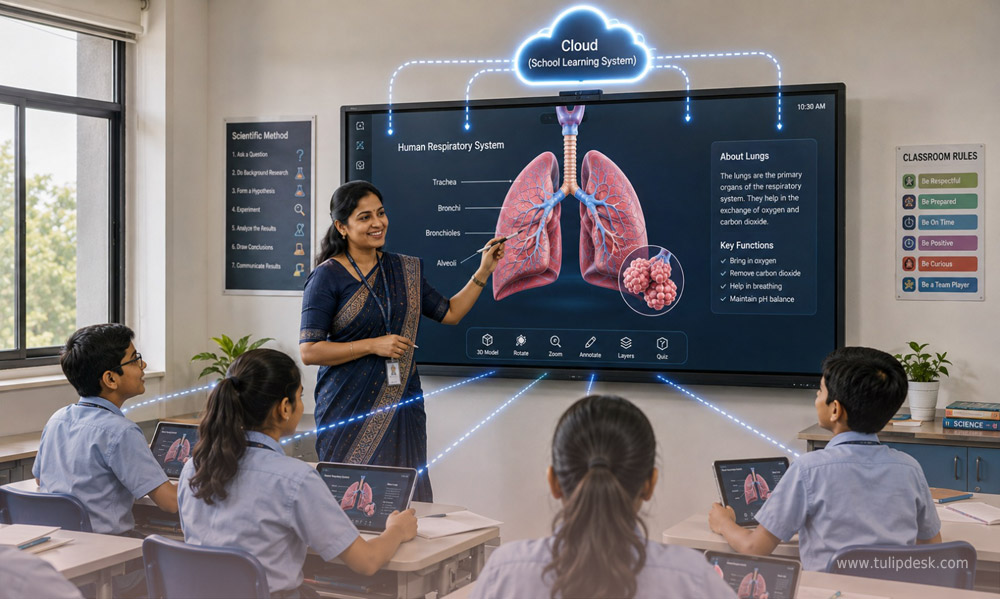
For traditional K-12 campuses and modern educational institutions, the chalk-and-board classroom is silently disappearing. That is not hyperbole; it is just the result of a whole generation of pupils growing up watching videos, swiping, and tapping before they ever pick up a piece of chalk. A digital-native child can only be captivated by static lectures and worn-out textbooks for a limited amount of time. As a result, school administrators who are paying attention are shifting toward smart classroom solutions that transform regular classrooms into interactive learning centers as 2026 approaches. More than just updating the classroom, touch-enabled displays, multimedia information, and more intelligent teaching tools are bridging the gap between theoretical instruction and practical comprehension. Here’s a closer look at how these tools are genuinely altering daily classroom activities.
The Evolution of Teaching: Moving Beyond Static Boards
If you ask any instructor what it is like to try to explain a calculus function, a 3D molecular structure, or the layout of a river delta using just a flat chalkboard, you will hear the same complaint: it is restrictive, and it shows in the eyes of the students. Ideas that ought to be vibrant go flat, and engagement suffers as a result.
A smart classroom solution modifies the way a lesson is presented rather than merely adding screens to a space:
- Teachers may write, mark, and edit text on interactive digital boards with much greater flexibility than they could with chalk.
- Without interfering with the lesson’s flow, teachers can switch between handwritten notes, video, 3D animation, and live online content.
- An educator can quickly access a pre-made interactive model rather than creating a rough diagram by hand.
Key Pillars of an Interactive Smart Classroom Ecosystem
In a successful digital learning space, hardware, intuitive software, and digital tools all need to work in perfect harmony.
- Teachers have a responsive surface for problem-solving and a central location to control media and music without leaving the class thanks to interactive screens and digital podiums.
- A teacher can quickly turn a student’s work into a lesson for the entire class by using document cameras, also known as visualizers, to project a textbook page, a student’s painting, or a live experiment directly onto the main screen.
- And when these tools are tied into a school management system, lesson plans, attendance, and assignments sync automatically, which means less paperwork chasing teachers around after the bell rings.
Driving High Student Engagement Through Visual and Experiential Learning
When students participate in activities rather than only observe, they learn more.
- Lessons feel less like lectures because of simulations and gamified tests, which also allow teachers to quickly assess whether a concept was truly understood.
- Various students react differently to different formats. Some require animated content, others require explicit explanations, and still others only truly get it when their hands are on the screen.
- Additionally, multi-touch panels allow multiple students to collaborate on a single task, such as solving equations or drawing a diagram side by side, which fosters teamwork in ways that a solo worksheet cannot.
Empowering Educators with Smart Classroom Tools
Smart classroom solutions are not intended to take the position of teachers; rather, it is intended to free up their time.
- Instead of starting from scratch every term, educators can save annotated whiteboards, video playlists, and digital notes directly to cloud storage. It allows them to reuse and refine lesson assets across different sections.
- When the classroom hardware communicates with the school’s ERP system, attendance, test results, and performance data log automatically, eliminating a lot of manual work.
- Additionally, a teacher can chat to a student who needs assistance for every minute that is not spent fumbling with setup or erasing a board.
Conclusion: Shaping the Future of Next-Gen Campuses
The foundation of contemporary educational achievement is the shift to an interactive, technologically enabled environment, which is no longer merely an optional upgrade. Educational institutions may reduce classroom boredom, encourage active inquiry, and give teachers the cutting-edge resources they need to foster student achievement by implementing a strong smart classroom solution. The ultimate commitment to academic innovation, improved student results, and institutional growth is to provide your campus with an integrated digital environment.