

Why does every Indian school need an Automated Admission Management System?
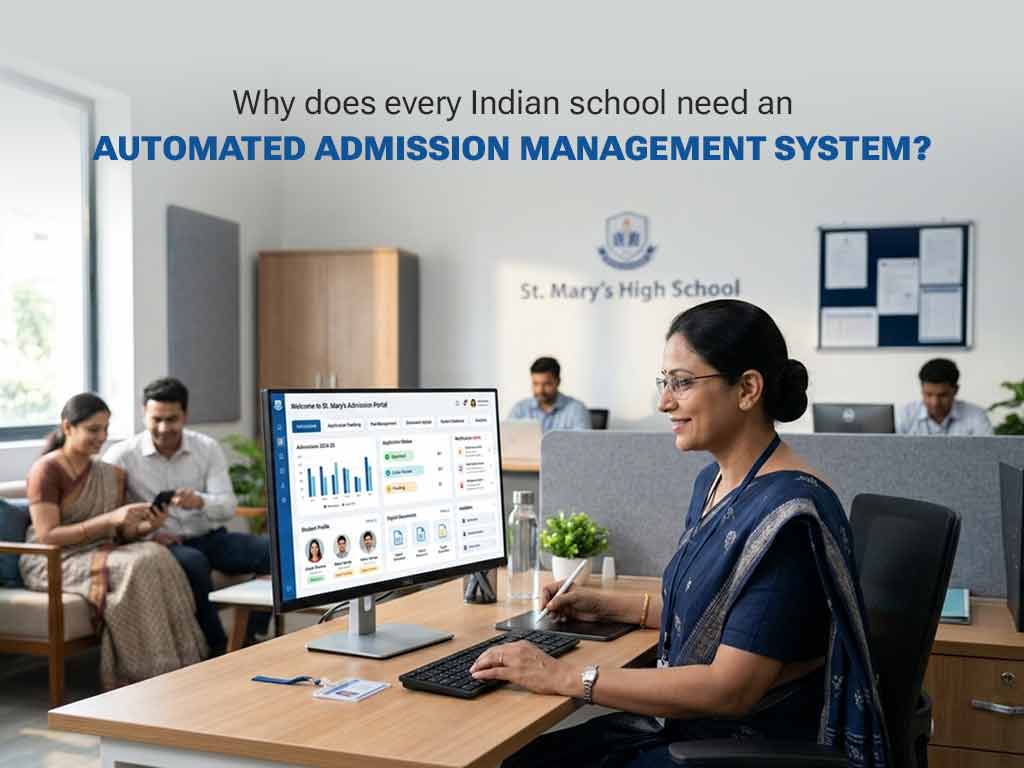
Admission season in Indian schools has traditionally been synonymous with long queues, endless paperwork, large numbers of queries and requests from parents. Heavy reliance on traditional manual forms, physical verification, and fragmented record-keeping using paper or outdated software has been an integral part of India’s education ecosystem for decades. This results in administrative stress for school authorities and staff alike. In other words, the hassle and chaos during the admission sessions are not new. However, with India’s education ecosystem expanding rapidly and digital governance becoming a national priority, every Indian school now needs an automated admission management system (also known as digital or online admission software). Such systems streamline the entire enrollment process, from inquiry to final enrollment, and deliver measurable improvements in efficiency, accuracy, and parent satisfaction.
The Challenges of Manual Admission Processes in Indian Schools
“In today’s fast-evolving educational landscape in India over 24.8 crore students are enrolled across approximately 14.72 lakh schools (as per recent UDISE+ data).”
High volume of applications:
Student populations are increasing in India. This leads to intense competition for limited seats, particularly in urban areas and schools affiliated with boards like the Central Board of Secondary Education (CBSE) and Indian Certificate of Secondary Education (ICSE). Institutions often receive hundreds to thousands of admission inquiries and applications each year, placing significant administrative pressure on manual systems and slowing down processing, verification, and communication workflows.
Time-consuming paperwork:
In manual admission processes, parents are required to submit physical forms along with photocopies of multiple documents such as birth certificates, transfer certificates, ID proofs, and academic records. This results in long queues at the school campus, repeated visits for corrections or missing documents, and delays in verification. As application volumes grow, manual document collection and verification significantly extend admission timelines and create avoidable stress for both parents and school authorities.
Human errors:
Physical handling of papers increases the risk of misplaced or damaged files, slows down screening and approval workflows, and adds unnecessary administrative burden on staff. Manual data entry often leads to mistakes such as incorrect spelling of student names, wrong dates of birth, mismatched roll numbers, or inaccurate contact details. Even small errors can create long-term complications in report cards, certificates, ID cards, examination registrations, and official board submissions. Rectifying these mistakes later requires repeated corrections across multiple registers and files, consuming additional time and creating confusion for staff, students, and parents. Over time, inconsistent data also affects the reliability of institutional records and reporting accuracy.
Limited accessibility:
Working parents often struggle to complete applications on time as they require physical visits during fixed office hours of admission sessions in different schools. Many cannot take leave repeatedly to submit forms, verify documents, or clarify queries. This results in incomplete applications, missed deadlines, and reduced enrollment conversions. Limited accessibility also restricts outstation or relocating families from applying easily, ultimately affecting the school’s reach and admission efficiency.
Lack of transparency:
In manual admission systems, parents rarely receive real-time updates about their application status. Without a tracking mechanism, they are forced to call or visit the school repeatedly to check whether forms have been received, verified, shortlisted, or approved. This constant follow-up increases administrative workload, creates communication gaps, and leads to frustration and mistrust. The absence of clear status visibility ultimately affects the overall parent experience and the school’s professional image.
Resource drain:
Manual academic and admission processes consume significant staff time in repetitive tasks such as form sorting, data entry, document verification, file organization, and follow-up calls. Instead of focusing on teaching quality, curriculum planning, student counseling, or performance improvement, administrative teams remain occupied with paperwork for weeks, especially during peak admission or examination periods. This misallocation of human resources reduces overall institutional productivity and limits the school’s ability to prioritize academic excellence and student support.
When these issues are amplified in a country as vast and competitive as India — with large applicant pools and limited seats — any delay in processing applications can directly impact enrollment outcomes. Long verification timelines, unclear communication, or repeated document requests create frustration for parents who are often applying to multiple schools simultaneously. In such scenarios, even minor inefficiencies can push families to choose institutions that offer faster responses and smoother processes.
To address this, schools need an automated admission management system that ensures speed, accuracy, and transparency at every stage. This not only reduces administrative bottlenecks but also strengthens parent trust and improves conversion rates.
What Is an Automated Admission Management System?
An automated admission management system is a digital platform (often cloud-based and integrated into broader school ERP software) that handles the full admission lifecycle online. Key features include:
- Online application forms and document uploads.
- Automated fee collection and payment gateways.
- Real-time status tracking for applicants.
- Document verification rules and merit list generation.
- Automated emails/SMS notifications.
- Integration with school websites or mobile apps.
Key Reasons Every Indian School Needs Automated Admission Management System
In an increasingly competitive education landscape, operational efficiency during admissions is not just an internal benefit — it is a strategic advantage.
Here are the core benefits, tailored to the Indian context:
Streamlined and Paperless Process
- A streamlined and paperless admission process allows parents to apply anytime and from anywhere through mobile or web portals. This eliminates the need to visit the school office or collect printed forms.
- Applications, document uploads, and fee payments can be completed online in a few simple steps, reducing queues and repeated visits. This convenience significantly lowers incomplete submissions and drop-offs.
- A paperless workflow also minimizes errors, prevents document loss, reduces storage needs, and speeds up verification. Overall, it enhances the parent experience while aligning with India’s digital education vision under the National Education Policy 2020.
Significant Time and Cost Savings
- Automation in admissions and academic management delivers significant time and cost savings for schools. Manual tasks like data entry, document verification, and cross-checking that once took weeks can now be completed in hours or days.
- Administrative staff are freed from repetitive work, allowing them to focus on higher-value tasks such as student support and academic coordination.
- This reduction in manual effort also lowers overtime expenses and hidden labor costs during peak admission seasons, improving overall operational efficiency and resource utilization.
Drastically Reduced Errors and Improved Accuracy
- Built-in validations in online forms, such as mandatory fields, format checks, and logical constraints, prevent incomplete or incorrect entries.
- Automated workflows instantly detect duplicate records, ensuring clean and reliable databases from the very first submission. This level of accuracy is essential for compliance with regulatory bodies like the CBSE or state education departments and helps schools maintain trustworthy records for reporting, assessments, and audits.
Enhanced Transparency and Parent Experience
- Real-time dashboards allow parents to track the status of their applications, such as “Application Received,” “Documents Verified,” or “Selected”, at any time from anywhere and using any device.
- Automated alerts and notifications keep parents informed about interview dates without the need for repeated phone calls or office visits. This clarity reduces frustration, builds trust, and creates a seamless experience, which in today’s competitive education market becomes a strong differentiator for schools.
Better Scalability for Growing Institutions
- Automated admission systems provide better scalability for schools of all sizes. Whether a school handles 500 or 5,000 applicants, the platform can manage the workload effortlessly without requiring additional staff.
- Multi-branch institutions can centralize and streamline processes across campuses, while smaller or rural schools gain access to affordable, cloud-based solutions. This ensures that growing student volumes are handled efficiently, supporting institutional expansion without adding administrative burden.
Integration and Future-Proofing
- Automated platforms connect admissions with other modules such as attendance, fees, and academic records, creating a unified and accurate student profile.
- With India’s student information system market projected to exceed USD 1 billion by 2033, adopting digital solutions now ensures schools stay compliant with emerging government mandates and NEP 2020 guidelines.
Early adoption also positions institutions competitively, making them ready for future growth and technology-driven education initiatives.
Improved Security and Compliance
- Digital storage with role-based access controls protects sensitive student and parent information, reducing the risk of lost or misplaced documents and potential data breaches compared to traditional paper files.
- Built-in audit trails and activity logs help schools meet regulatory and board requirements, ensuring transparency and accountability in every step of the admission process.
Conclusion
In 2026, with rising internet penetration, smartphone usage among parents, and government emphasis on digital transformation in education, clinging to manual admission processes is no longer viable. Instead, it hinders efficiency, frustrates stakeholders, and risks losing quality enrollments.
An automated admission management system isn’t a luxury; it’s a necessity for modern Indian schools aiming to deliver quality education without administrative chaos. By embracing automation, schools not only survive the admission rush but thrive, thereby creating a win-win for administrators, parents, and students in India’s dynamic education ecosystem. If your school is still relying on outdated methods, now is the time to explore digital solutions tailored for Indian institutions.